Viral Clarinet Video: Parkinson’s Patient Plays Clarinet Throughout Brain Surgery

RNE, NETWORK.
Doctors at Kings College Hospital, London, have achieved a remarkable feat in the history of surgery. A patient diagnosed with Parkinson’s disease played the clarinet throughout an open brain surgery, allowing doctors to observe live improvements in her body’s muscles. Denise Bacon, a 65-year-old woman battling Parkinson’s since 2014, showed surprising improvements during a four-hour procedure known as Deep Brain Stimulation (DBS). The disease had hindered her ability to walk, swim, dance, and even play her beloved clarinet. Nevertheless, the four-hour operation showed instant improvement, allowing Denise to play the clarinet again.
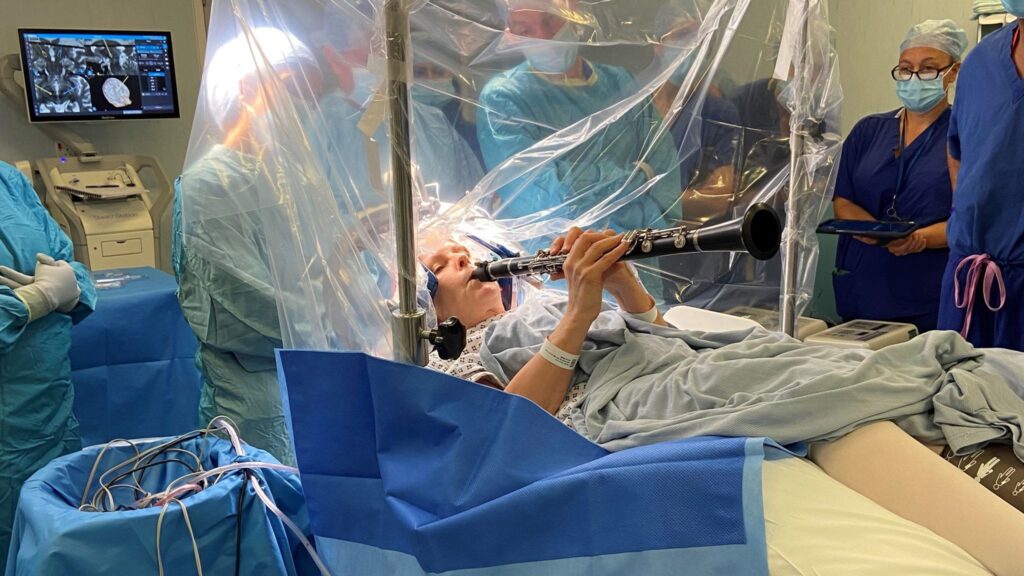
Denise, who had been suffering from slowed movement, rigidity, and stiff muscles, was given electric stimulation in her brain to help restore control. Speaking to Reuters, she said, “I am feeling really pleased that I am going towards being able to play the clarinet again. There is a period of programming that has to take place after the operation, so after the recovery period, I’m gradually getting more and more stimulation and I can see that when I try to play the clarinet, it is getting better.”

Dr. Keyoumars Ashkan, a neurosurgeon at King’s College Hospital who performed the surgery, explained why they chose to perform the operation in such a non conventional way. He said, “Denise Bacon had some clear goals, and one of them was being able to go back and play the clarinet. So obviously we thought the best way to assess that would be to have her awake during the operation, playing the clarinet, so we could test her finger movements and the speed of the movements.”
What Is Parkinson’s Disease ?
Parkinson’s disease is a disorder of the nervous system that exacerbates over time. The nervous system controls many vital body functions like walking, speaking, heartbeat, breathing, and digestion. To dumb it down, Parkinson’s affects movement, senses, and control of our body. The disease is common among women aged 60 and above. However, it can affect younger people as well.
Common symptoms :
Tremors in the hands, feet, or jaw Slowed body movements Muscle stiffness and rigidity Poor posture and balance Changes in speech and handwriting Constipation, depression, and sleep disorders.
Doctors have not found any cure for the disease yet. Treatments like Deep Brain Stimulation can help patients ease their mind and regain control which helps in improving their quality of life.