From Bikaner’s Cancer Hospital to Delhi Black Market: How Did a Government-Supplied Drug Get Diverted?
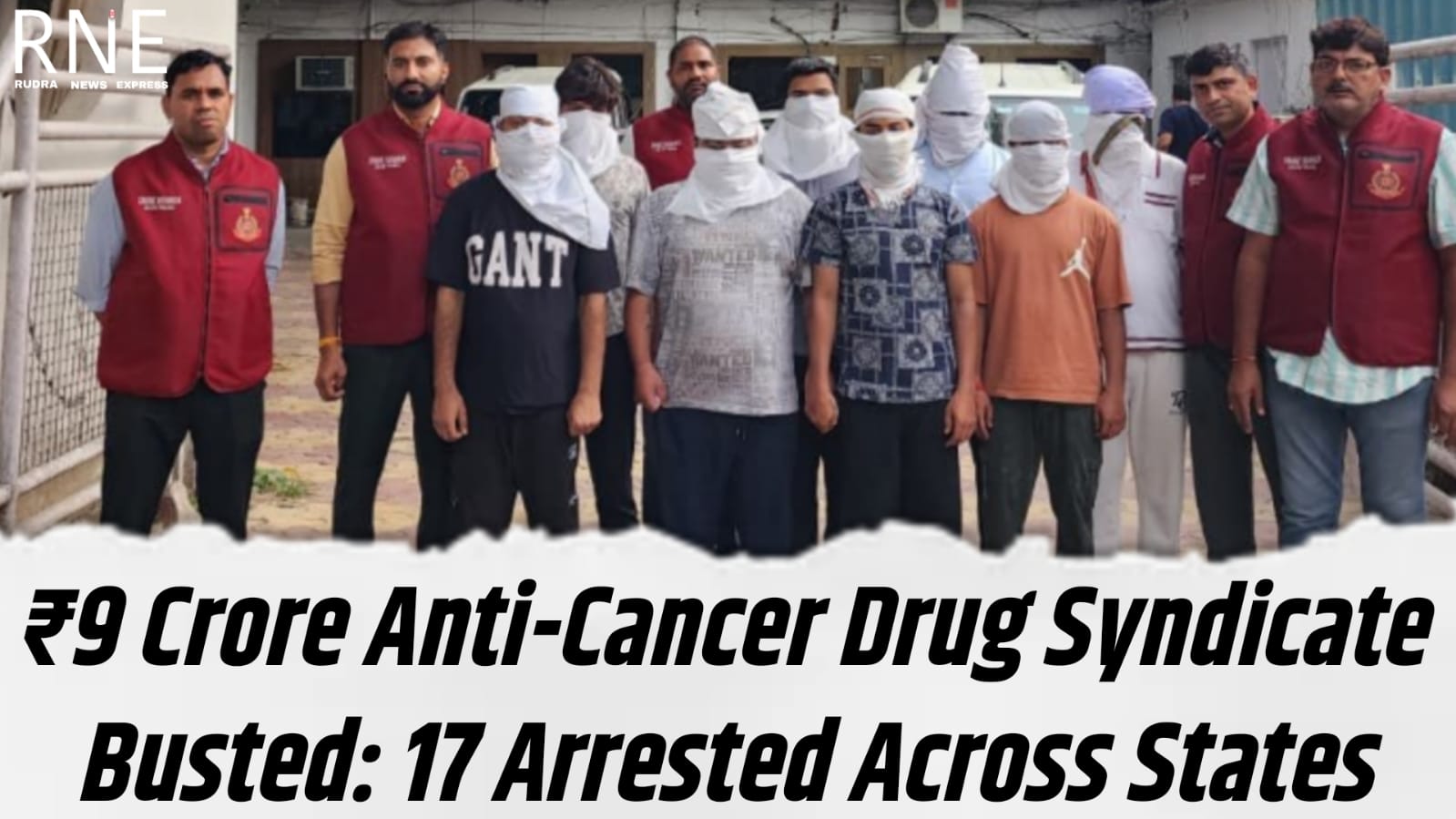
Delhi Crime Branch uncovers nationwide network dealing in counterfeit and illegally diverted cancer medicines; 588 filled vials, 3,021 other medicine units and ₹50 lakh cash recovered
Rudra News Express New Delhi/Bikaner
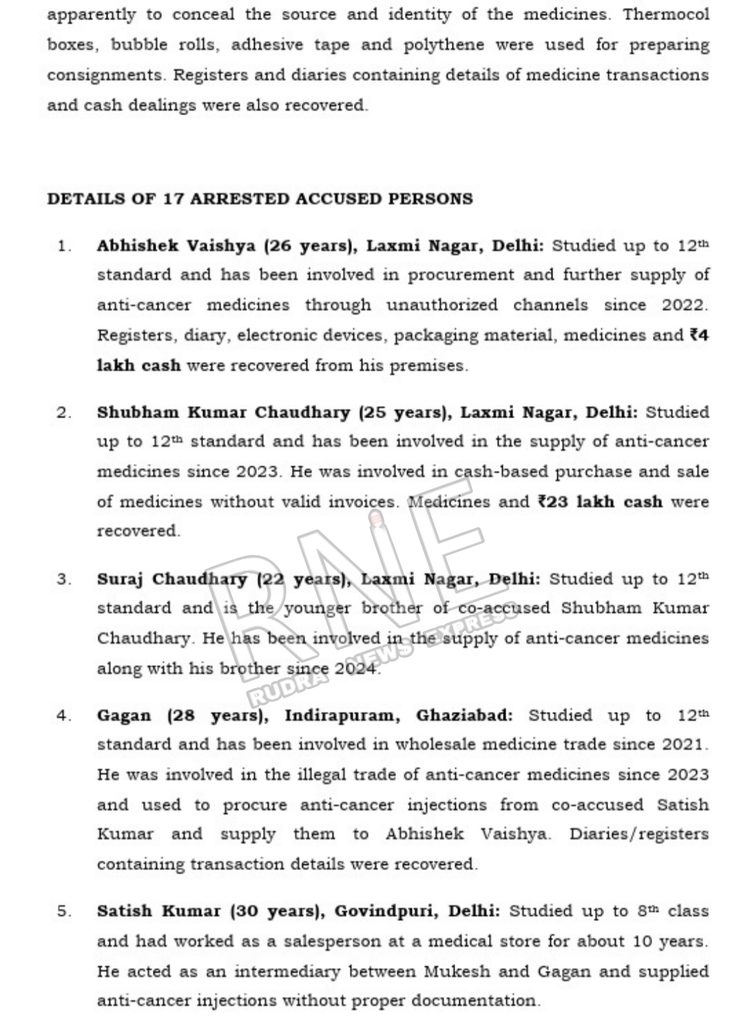
A shocking interstate network trafficking in counterfeit and illegally diverted anti-cancer medicines has been busted by the Inter-State Cell of the Delhi Crime Branch, exposing a dangerous supply chain stretching across Delhi-NCR, Mumbai, Hyderabad, Haryana, Uttar Pradesh, Rajasthan and other locations.

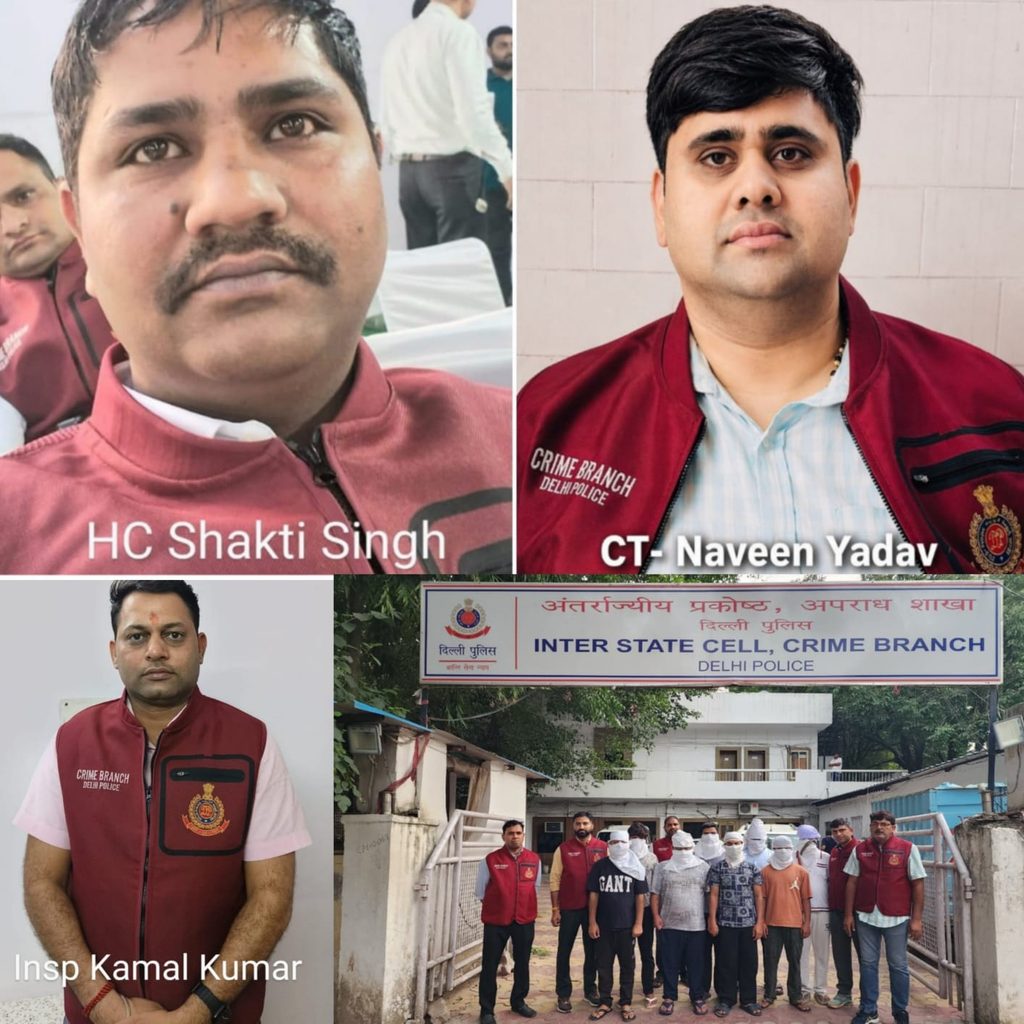
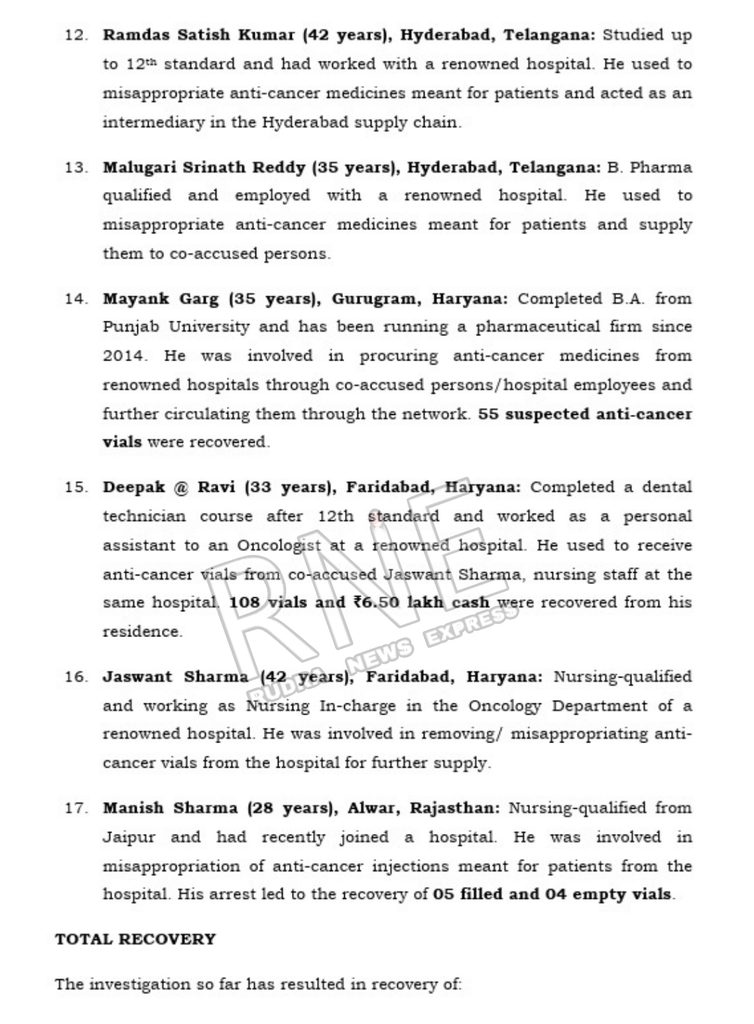
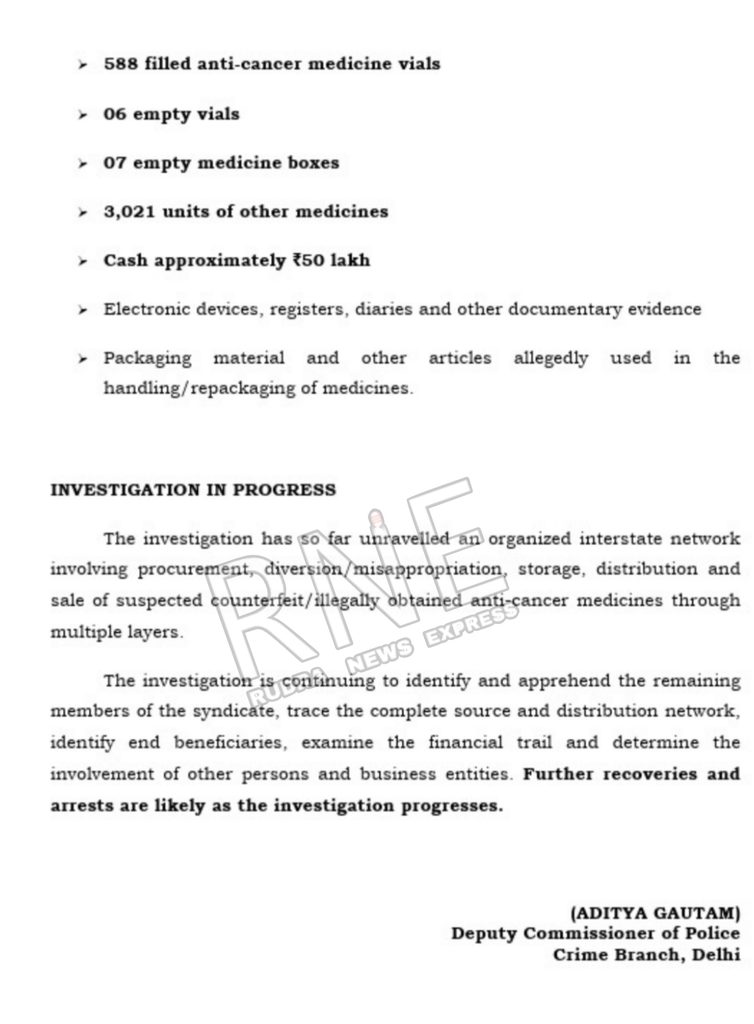
The investigation has so far resulted in the arrest of 17 accused persons and the recovery of 588 filled anti-cancer medicine vials, six empty vials, seven empty medicine boxes and 3,021 units of other medicines. The total value of the recovered medicines and related material has been estimated at approximately ₹9 crore. Police also recovered around ₹50 lakh in cash, along with electronic devices, registers, diaries and packaging material allegedly used for storing and repackaging medicines.
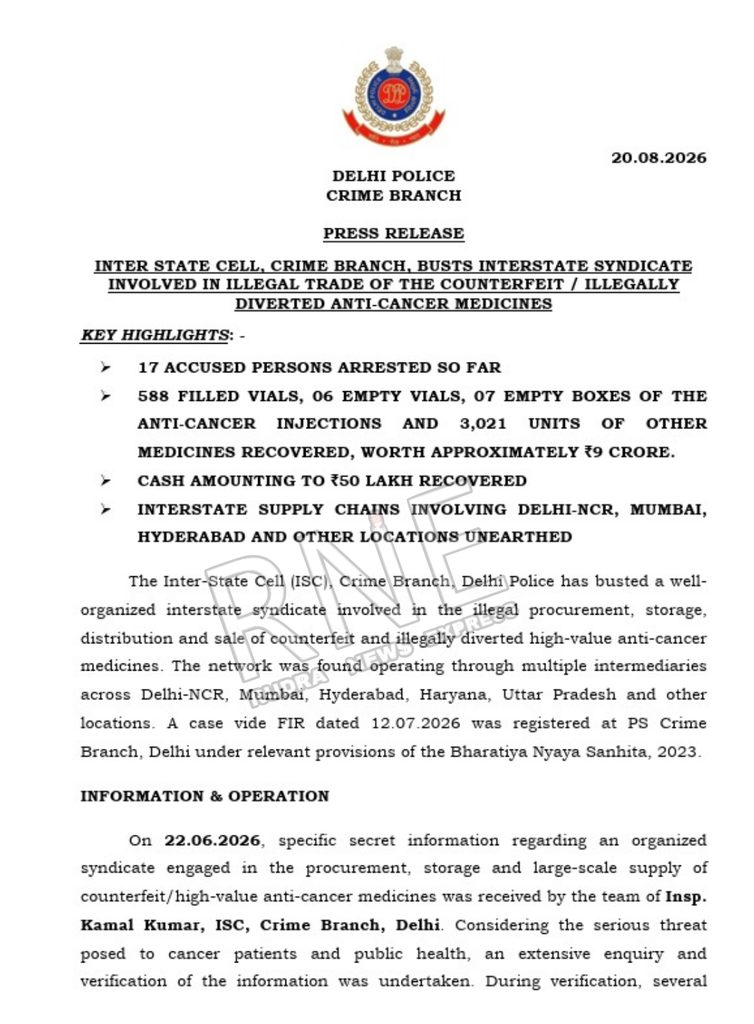
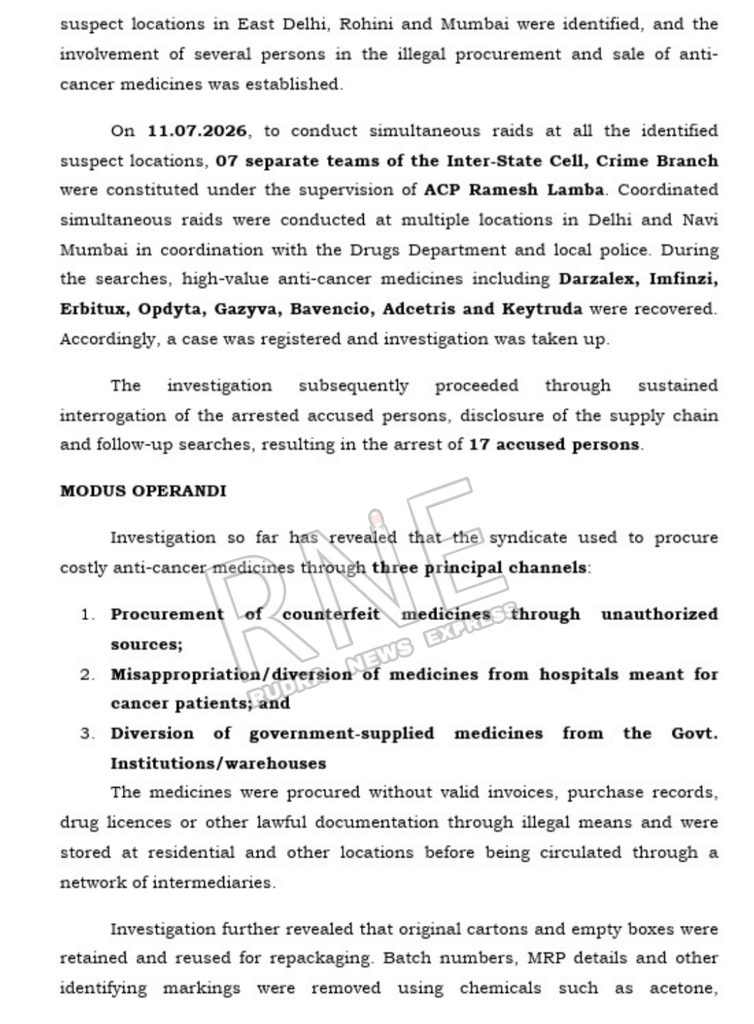
What makes the case particularly alarming is that the racket was allegedly sourcing cancer medicines through three different channels—procurement of counterfeit medicines from unauthorised sources, diversion or misappropriation of medicines meant for cancer patients in hospitals, and diversion of government-supplied medicines from government institutions and warehouses.
Not Just Bikaner: A Multi-State Network :
The case has a significant Rajasthan connection, but the Delhi Police investigation makes it clear that Bikaner is only one link in a much larger interstate network.
Among those arrested is Manish Sharma, 28, from Alwar, Rajasthan, who had recently joined a hospital and was allegedly involved in misappropriating anti-cancer injections meant for patients. His arrest led to the recovery of five filled and four empty vials, according to the Delhi Police.
The investigation has also uncovered alleged hospital-level diversion in Hyderabad and Faridabad, besides supply and distribution links in Delhi, Ghaziabad, Gurugram, Navi Mumbai, Jhajjar, Noida and other locations.
Hospital Staff Allegedly Part of the Supply Chain :
The investigation has brought the role of hospital-linked personnel under particular scrutiny.
Delhi Police said Jaswant Sharma, a nursing-qualified employee working as Nursing In-charge in the Oncology Department of a hospital in Faridabad, was allegedly involved in removing anti-cancer vials from the hospital for further supply.
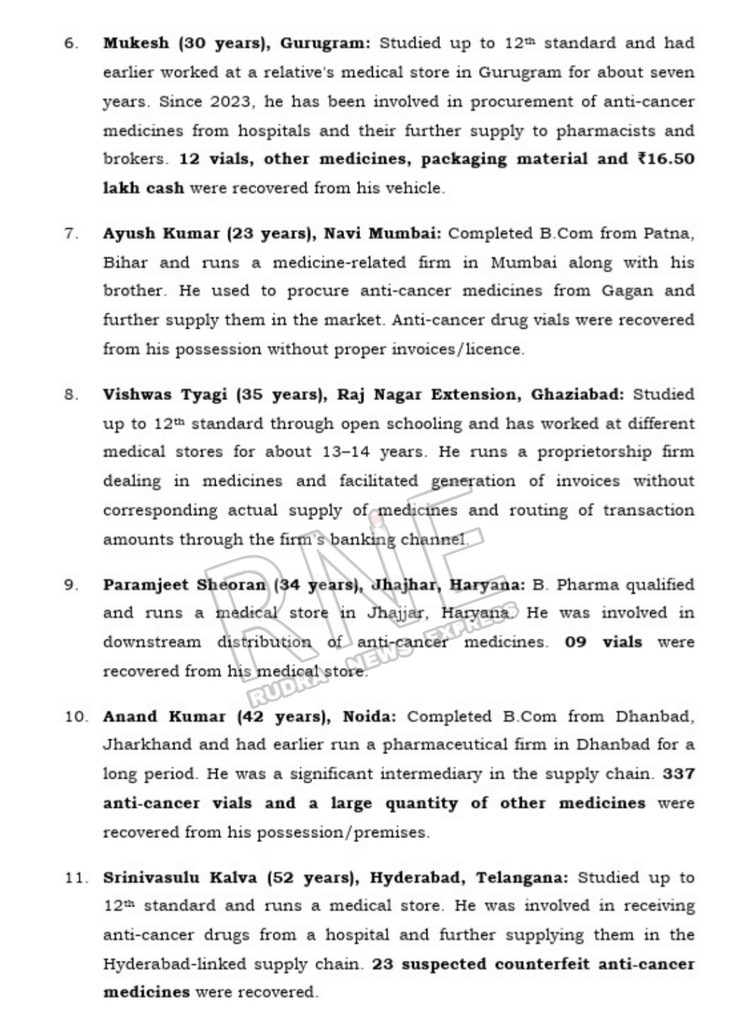
Another accused, Deepak alias Ravi, had worked as a personal assistant to an oncologist at the same hospital and allegedly received anti-cancer vials from Jaswant Sharma. Police recovered 108 vials and ₹6.50 lakh cash from his residence.
In Hyderabad, Ramdas Satish Kumar, who had worked with a reputed hospital, was allegedly involved in misappropriating medicines meant for patients. Malugari Srinath Reddy, a B.Pharma-qualified hospital employee, was also allegedly involved in diverting anti-cancer medicines.
Bikaner Connection Raises Fresh Questions :
The wider investigation assumes greater significance in Rajasthan because a Bavencio anti-cancer injection recovered in Delhi has reportedly been linked to government supply meant for Bikaner.
The crucial question now is not whether Bikaner was the centre of the racket—it was not. The larger question is whether a medicine supplied through the government system for cancer patients in Bikaner was subsequently diverted into the illegal market.
The Rajasthan government has already ordered a factual inquiry into the matter and directed officials to examine the complete supply chain, including **stock registers, indents, dispatch records and hospital-level distribution.
Counterfeit Medicines Also Part of the Investigation :
The Delhi Police press release specifically describes the network as being involved in the trade of “counterfeit/illegally diverted” anti-cancer medicines.
Among the medicines recovered during the raids were high-value cancer drugs including Darzalex, Imfinzi, Erbitux, Opdyta, Gazyva, Bavencio, Adcetris and Keytruda.
Police said the syndicate procured medicines without valid invoices, purchase records, drug licences or other lawful documentation. Medicines were allegedly stored in residential and other locations before being distributed through multiple intermediaries.
Original Boxes Reused, Batch Details Allegedly Removed :
The investigation has also revealed an alleged repackaging operation.
According to Delhi Police, original cartons and empty boxes were retained and reused for repackaging medicines. Batch numbers, MRP details and other identifying markings were allegedly removed using chemicals such as acetone to conceal the source and identity of the medicines.
Thermocol boxes, bubble rolls, adhesive tape and polythene were allegedly used to prepare consignments.
Registers and diaries containing details of medicine transactions and cash dealings were also recovered.
The 17 Arrested :
- Abhishek Vaishya — Laxmi Nagar, Delhi
- Shubham Kumar Chaudhary — Laxmi Nagar, Delhi
- Suraj Chaudhary — Laxmi Nagar, Delhi
- Gagan — Indirapuram, Ghaziabad
- Satish Kumar — Govindpuri, Delhi
- Mukesh — Gurugram
- Ayush Kumar — Navi Mumbai
- Vishwas Tyagi — Ghaziabad
- Paramjeet Sheoran — Jhajhar, Haryana
- Anand Kumar — Noida
- Srinivasulu Kalva — Hyderabad
- Ramdas Satish Kumar — Hyderabad
- Malugari Srinath Reddy — Hyderabad
- Mayank Garg — Gurugram
- Deepak alias Ravi — Faridabad
- Jaswant Sharma — Faridabad
- Manish Sharma — Alwar, Rajasthan
₹9 Crore Recovery, But Investigation Far From Over :
The Delhi Police investigation is still underway. Officers are trying to identify the remaining members of the syndicate, trace the complete source and distribution network, identify the final beneficiaries and buyers, and examine the financial trail. More arrests and recoveries are likely as the investigation progresses.
The case has now raised a much larger question for the country’s healthcare system: If counterfeit medicines can enter the market and genuine medicines meant for cancer patients can allegedly be diverted from hospitals and government supply chains, how secure is the journey of a life-saving medicine from the warehouse to the patient?
For Bikaner, the immediate question is even more specific:
How did a medicine reportedly meant for government cancer treatment reach the illegal market—and can authorities account for every vial from the original government consignment to the patient?
The answers could determine whether this is merely a major drug racket—or evidence of a much deeper vulnerability in India’s public healthcare medicine supply chain.